
Kavanaugh claimed wrongful targeting of Americans would be a mild inconvenience. He’s out of touch with the real world, Sotomayor suggested
In her first public remarks concerning last fall’s ruling from the Supreme Court’s conservative majority giving mass deportation agents the green light to carry out state-sanctioned racial profiling, Associate Justice Sonia Sotomayor singled out the un-American concurrence from colleague Brett Kavanaugh, which shockingly insisted that any wrongful targeting of American citizens by ICE would prove nothing more than a mild inconvenience.
Kavanaugh might be a bit out of touch with the real world, the nation’s first Latina justice suggested at an April 7 event hosted by the University of Kansas School of Law.
“I had a colleague in that case who wrote, you know, these are only temporary stops,” she said, referencing these now-notorious Kavanaugh stops. “This is from a man whose parents were professionals. And probably doesn’t really know any person who works by the hour.”
“Those hours that they took you away, nobody’s paying that person,” Sotomayor continued, pointing to the time that Americans targeted under Kavanaugh stops are ripped from their jobs and lives. “And that makes a difference between a meal for him and his kids that night and maybe just cold supper.”
In the court’s shadow docket ruling last September, Kavanaugh repeatedly claimed that the wrongful targeting of Americans would prove largely inconsequential to their everyday lives, writing that if the targeted person turns out to be a U.S. citizen, “that individual will be free to go after the brief encounter.” Questioning in this situation is “typically brief,” he claimed, “and those individuals may promptly go free after making clear to the immigration officers that they are U.S. citizens or otherwise legally in the United States.”
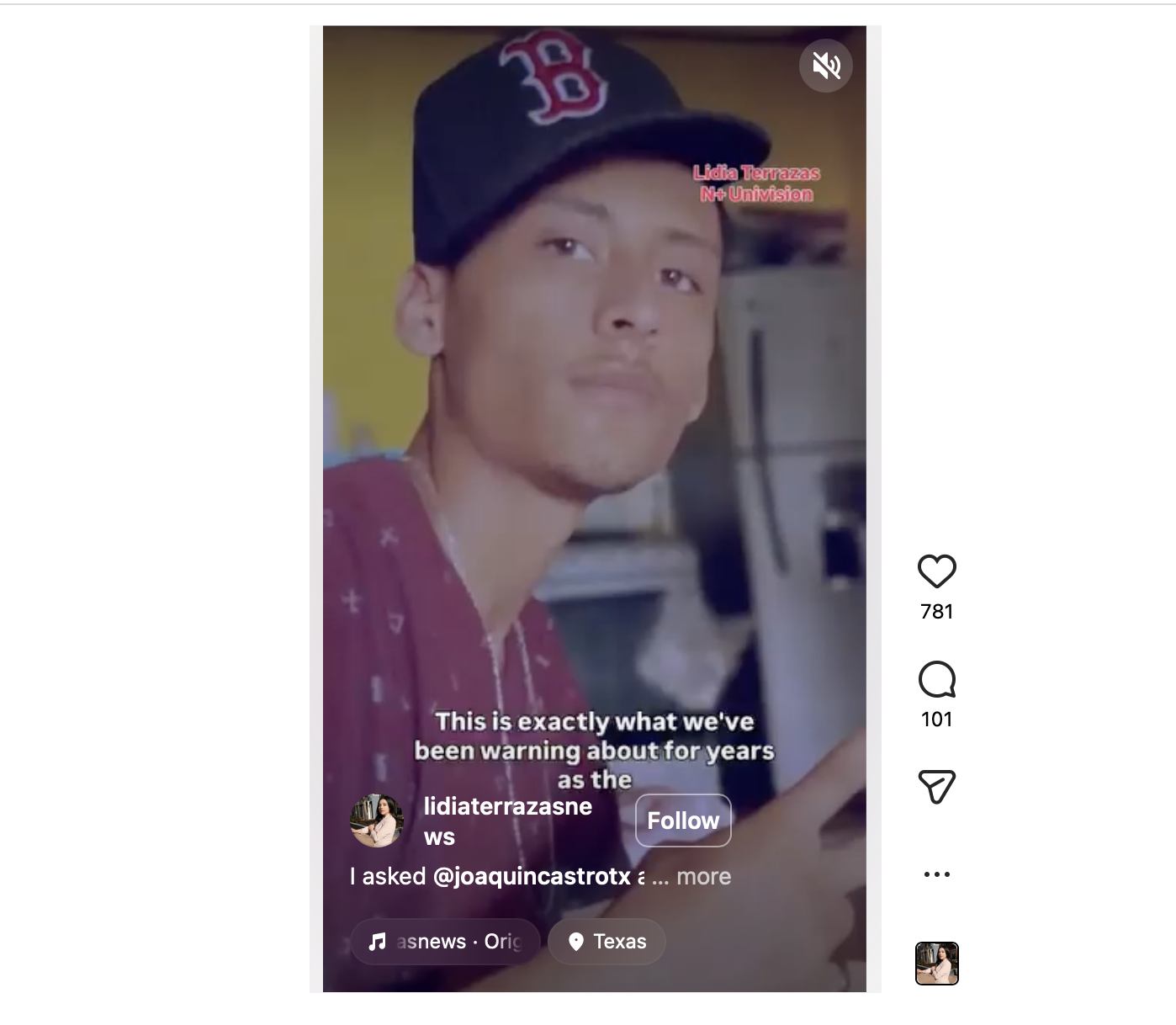
Out here in reality, this wasn’t the case at all for Brian Morales, a working American who was targeted in a Kavanaugh stop. Despite being born here, Morales was racially profiled, threatened with bunk felony charges and years of imprisonment, and then summarily kicked out of his own country days ago despite his repeated protestations to Customs and Border Protection (CBP) agents that he was an American, as the San Antonio Current revealed in an April 13 article titled “Report: DHS deported a U.S. citizen arrested near San Antonio.”
“Morales alleges three separate CBP agents said they didn’t believe him when he told them he had a birth certificate, Social Security card and other ways of proving his citizenship,” the report said. “The officers threatened him with a fraud charge and five years’ imprisonment if he didn’t sign a voluntary departure order, he also maintains.” Mass deportation agents – which the administration continues to refuse to rein in, prolonging this entirely avoidable partial government shutdown – are “often ignoring people when they say, ‘Hey, I am a U.S. citizen here’s the proof,’” remarked Rep. Joaquin Castro (D-TX).
Other working Americans targeted in these dreaded Kavanaugh stops include George Retes, the disabled U.S. military veteran who was trying to get to his job as a security guard at a California farm when he was attacked with a chemical agent and brutally dragged out of his vehicle at gunpoint, which resulted in his days-long detention despite facing no charges at all. Andrea Velez, a U.S. citizen and Cal Poly Pomona graduate, was also dragged by masked men and subsequently jailed for two days despite trying to tell agents that she had I.D. in her purse. Her arrest was so violent that her mom and sister, who witnessed the incident, thought she was being kidnapped. And in Alabama, American citizen and construction worker Leo Garcia Venegas was targeted in a Kavanaugh stop not once, but twice. During both incidents, agents accused him of faking his REAL ID, continuing a trend where federal officers simply refuse to acknowledge Americans of color are “real” Americans.
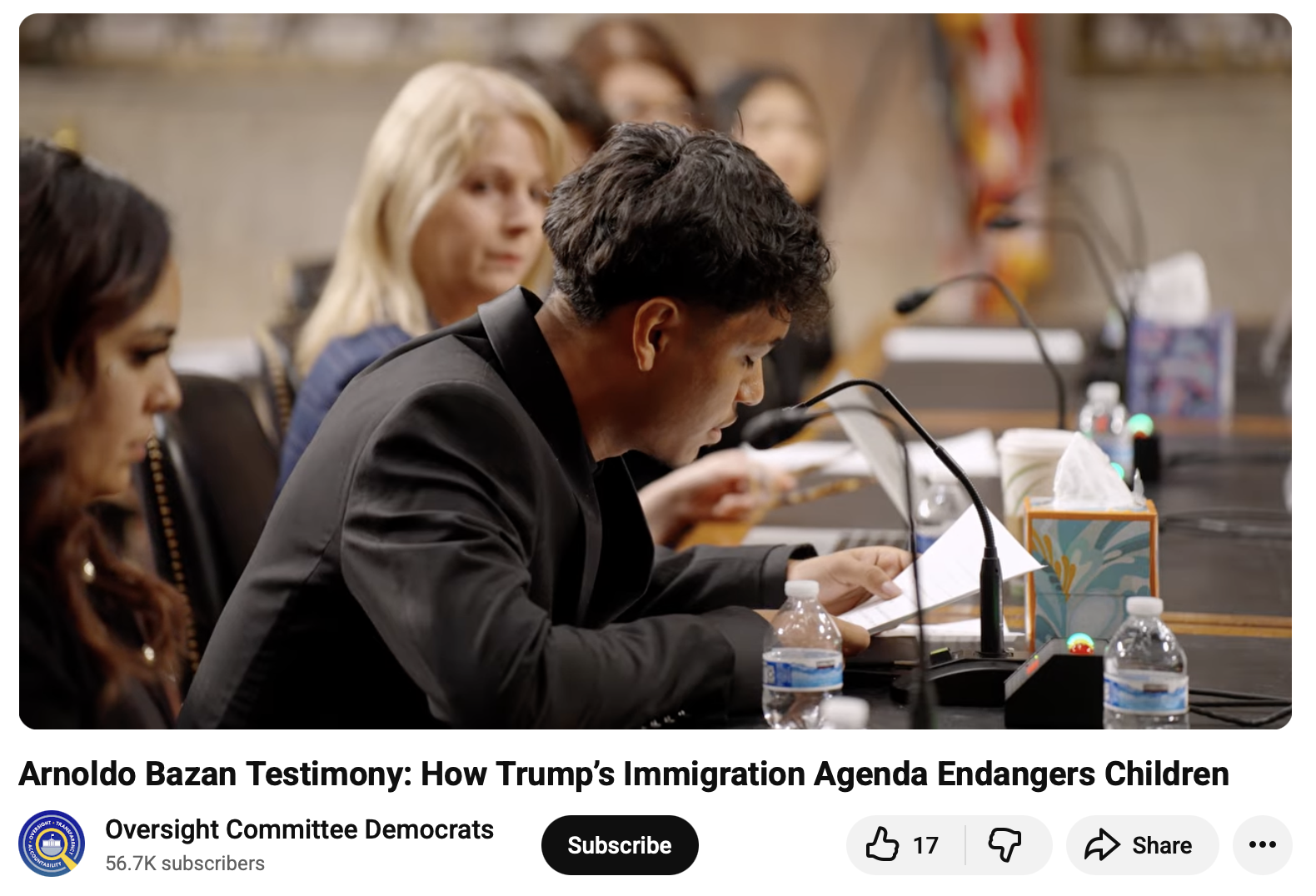
Not even U.S. citizen kids have been immune from Kavanaugh stops despite their age. During emotional testimony in a March hearing, 16-year-old Arnoldo Bazan bravely shared how he was physically, verbally, and emotionally assaulted by mass deportation agents who were abducting his father.
“Officers grabbed me and ripped my shirt. One officer put me in a choke-hold. The officer choking me told me, ‘You’re done.’ His grip was so tight that I wondered if I would make it out alive,” Arnoldo testified. “With all of my strength, I screamed that I was underage and from the United States.” When he was finally let go, the teen began yelling to bystanders that he had proof on his phone that agents had tried to flip his family’s car. That’s when the same agent then seized his phone, threw him into a vehicle, and began to verbally abuse him.
“They mocked us,” he continued. “They told me I was ‘gay for crying,’ ‘an illegal idiot,’ a ‘border hopper,’ and other demeaning words. These officers even celebrated that they caught two people and that their bonus would be good.” Arnoldo and his dad were then driven back to their house, where the teen said he was able to pray with his dad for a final time. “I tried to hug him, but he couldn’t hug me back because he was handcuffed.”
“Why are we allowing ICE agents to terrorize our neighbors and traumatize our children?” an educator asked at the hearing. “Why are we watching as laws are broken in broad daylight?”
As Justice Sotomayor said in her remarks, these are stolen hours that threaten Americans’ livelihoods, wellbeing including mental health, and in the case of Morales, their very place in this country. But as legal observers noted, her rare critique also appeared to be an attempt to get some sense into her colleague as rising numbers of Americans are demanding accountability from unchecked federal enforcement agencies.
“I do think she’s trying to give Kavanaugh a second bite at the apple,” Slate’s Mark Joseph Stern said. “She didn’t just say: He’s wrong and he’s bad. She suggested that he just didn’t really understand what was involved with these detentions because he’s sheltered and privileged. And that leaves open the possibility that if he did understand what they entailed, he would understand that precedent doesn’t actually allow them. So in the future, that precedent could be restored.” For the sake of the constitutional rights of all, we should all hope the same.
