One 2019 study from the Migration Policy Institute found that between 2001 and 2013, almost 300 foreign-born soldiers died in service of their adoptive country
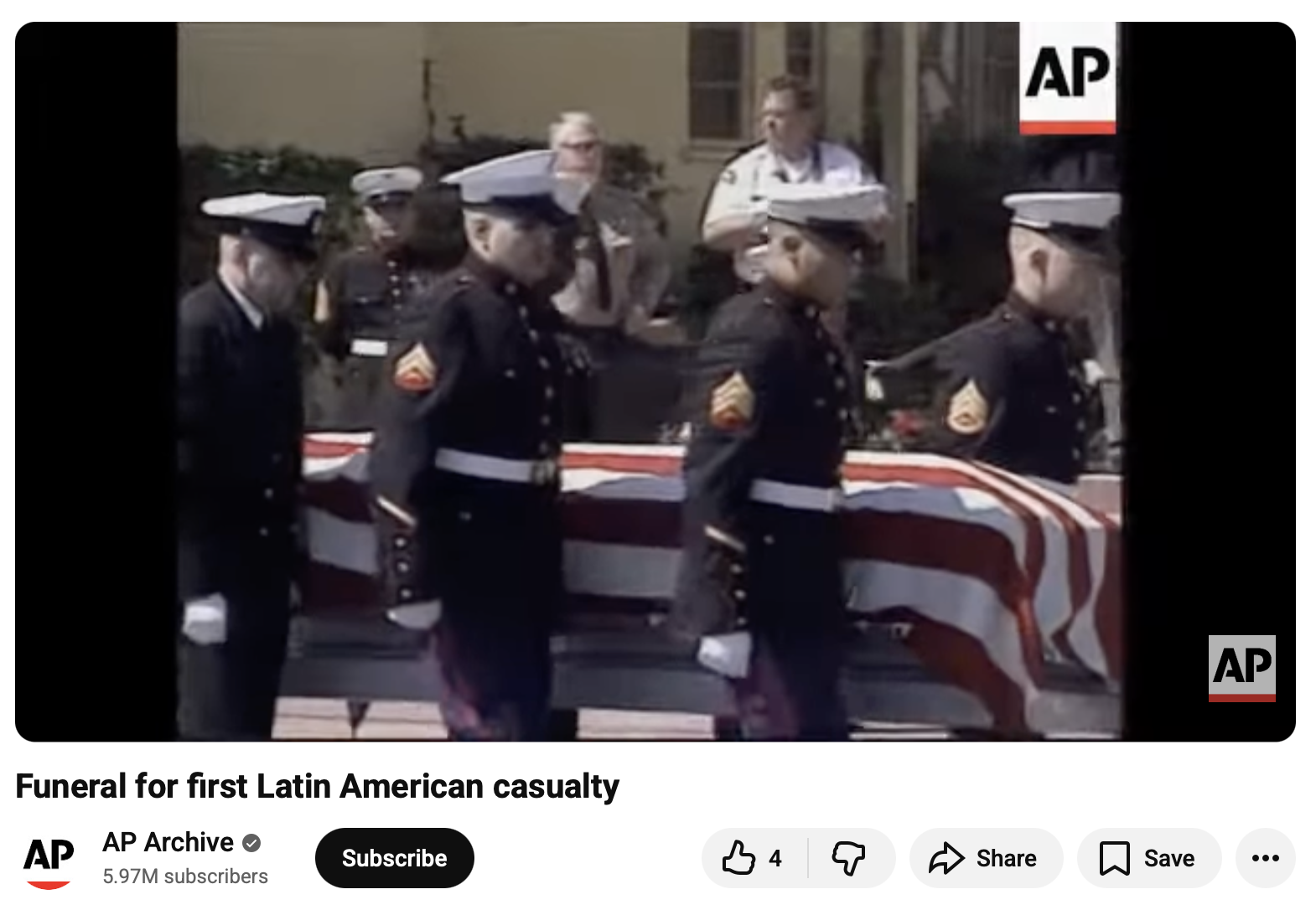
José Gutierrez is not a name remembered by most Americans, but it should be. The Marine Corps. Lance corporal – believed to have been the second U.S. service member to have been killed during Operation Iraqi Freedom – grew up an orphan on the streets of Guatemala and arrived in the U.S. without papers. He learned English, finished school, and planned to become an architect but put that dream on hold in order to enlist.
Gutierrez, whose parents died when he was just 14, “wanted to give the United States what the United States gave to him,” his foster sister later remembered. “He came with nothing. This country gave him everything.” He was just 22.
This Memorial Day, we remember and lift up the names of the immigrant U.S. service members who, like Gutierrez, have made the ultimate sacrifice in service of their adoptive country.
Nigeria-born Army Pfc. Francis Obaji had plans to go to medical school after excelling at his Brooklyn, N.Y. high school studies, but one day in 2001 forever altered “the course of his life,” the American Immigration Council (AIC) said. “Francis was waiting for the Staten Island Ferry in lower Manhattan when the attacks of September 11 struck the world. After witnessing the horror of the attack from so close, Francis immediately decided to join the military.”
“Throughout his training and deployment in Iraq, Francis never lost his optimism, and he was unstoppable in his determination to defend his adopted country,” AIC said. “Sadly, on January 16, 2005, Francis died in a vehicle accident in Iraq.” Romania-born Army Sergeant Catalin Dima also enlisted after 9/11 and actually became an American citizen while deployed in the Middle East. He was killed on the same day he was promoted in rank in 2004, AIC said.
Marine Corporal and military photographer Sara Medina, a daughter of Mexican immigrants, was a student at an Aurora high school in Illinois when she decided to enlist. She was on what was supposed to be her last military mission and was newly-engaged to a fellow service member when she was killed in a helicopter crash while supporting earthquake relief efforts in Nepal in 2015. “She was doing what she loves,” said one Aurora community member. “She had a passion for it, and hopefully fulfilled her dreams.”
One 2019 study from the Migration Policy Institute found that between 2001 and 2013, almost 300 foreign-born soldiers died in combat. Not all have been U.S. citizens, either. For example, while Gutierrez had legal status at the time of his death, he was not yet naturalized. For his sacrifices, he was awarded posthumous citizenship. Cardinal Roger Mahony, then archbishop of Los Angeles, expressed gratitude but nonetheless called it “inadequate.”
“It seems to me that it is important for us to recognize that in his self sacrifice the importance of our immigrant men and women,” he said.
Foreign-born service members have been enlisting in the U.S. military since our nation’s founding, said FWD.us. “Hundreds of thousands of immigrants pledged to defend the United States with their lives in the Civil War, both World Wars, and conflicts like those in Vietnam, Afghanistan and Iraq,” the organization said in 2022. Many have served with distinction: Military.com reported in 2020 that “of the more than 3,400 Medals of Honor awarded since the Civil War, 22% have gone to immigrants.”
“In recent years, recipients of the Medal of Honor have included Florent Groberg, who was born in France but was awarded the medal in 2015 for actions in Afghanistan in 2012; Tibor Rubin, born in Hungary and awarded the medal in 2005 for his actions during the Korean War; and Leslie Sabo Jr., who was born in Austria and was posthumously honored in 2012, 42 years after he died in Cambodia,” the report said. Alfred V. Rascon, a retired Army lieutenant colonel who fought in the Vietnam War, was awarded a Silver Star for service a year before he ever became fully American on paper.
While overall recruitment numbers shift over time, “the foreign born have been a constant presence in the U.S. armed forces,” the Migration Policy Institute said in 2024. “As of 2022, nearly 731,000 U.S. veterans had been born outside the United States, representing 4.5 percent of the country’s 16.2 million veterans.”
Despite their centuries-long sacrifices and contributions to our country, U.S. military service members and their loved ones have not been immune from federal immigration enforcement policy, including deportation. The New York Times reported in March that the Trump administration “began deportation proceedings for 34 former members of the military over the past year,” while nearly 250 relatives were similarly targeted for removal.
This has been an intentional deviation from the norms, after the previous administration implemented policy instructing immigration agents to refrain from targeting these individuals.
“Military service is complicated, but when honestly entered into, it is a form of sacrifice that the country itself has long described as sacred, and the threshold for what is owed in return has to be correspondingly high,” Dr. Austin Kocher of Syracuse University writes. “It ought to be completely inconceivable to anyone in this country, and especially to anyone whose politics purport to be pro-American, that any veteran be arrested, detained, or deported, irrespective of what they have done or who they are.”
And, as José Gutierrez, Francis Obaji, Catalin Dima, and Sara Medina have demonstrated, when they volunteer to enlist and risk their lives in service of their adoptive nation. On Memorial Day, we remember their names – and the names of all who have fallen. “While they hail from places as varied as Africa, the Middle East, and the Caribbean, each of these solders shares one thing in common,” as AIC noted. “A patriotism and a dedication to their adopted country worthy of celebrating.”
